Using Your Phone on a Cruise: Tips & Cruise Phone Plans
Cruise Cell Service: Stay Connected at Sea
Info at a glance
- Do cell phones work on cruise ships?
- Should I bring my cell phone on a cruise?
- What’s included in the AT&T International Day Pass for cruise ship travel?
- Factors to consider when choosing a phone plan for a cruise
- Discover valuable tips for using a cell phone on a cruise
- Using airplane mode while on a cruise
- AT&T Business Cruise packages
Do cell phones work on cruise ships?
Yes, most smartphones these days work aboard cruise ships when out at sea. You even have several options to choose from, as we discuss in greater detail later on. However, this hasn’t always been the case. Using a cell phone on cruises was once a rare and expensive luxury. To use the internet in the late 90s and early 2000s, you’d have had to use a desktop at one of the available cruise ship internet cafes or bring your own laptop. Now, not only can anyone access the internet using their own smartphone, but there are more choices than ever for staying connected on board.
Here are the main ways to use your phone on a cruise:
- Wi-Fi service: Most cruise ships offer their own Wi-Fi service for guests on board. The quality and price can vary by ship.
- Cellular plans at sea: Some home-based cellular providers, such as AT&T, have special plans for cruise goers.
- Roaming cellular service: Most major cruise lines have a satellite network through which you may be able to use for your regular cell service. This is usually the most expensive way to make calls or use data, as you’re charged at pay-per-use rates. However, new high-speed satellite and Wi-Fi systems, available on select cruise lines and ships, now allow you to manage expenses based on your budget.
- Cruise-focused eSIMs: Some third-party providers offer eSIMs designed to work with the ship’s satellite network.
- Standard regional eSIMs: These are available from local shops and are most useful when you’re at port and not at sea.
Should I bring my cell phone on a cruise?
Most cruise ships offer Wi-Fi and a cellular network onboard, making it easy to stay connected at sea. And when planning onshore excursions, having a seamless connection from ship to shore will likely prove beneficial. So, even if you plan to turn your phone off most of the time to immerse yourself fully in vacation mode, your phone can still prove to be handy at times.
On the flip side, using the ship’s cellular network can be quite expensive. That’s why it’s always best to plan ahead and add an international plan to your cellular package, such as the AT&T International Day Pass®, or you may pay more than you planned.
Learn more about AT&T International Day Pass.
Why it's important to have a cell phone on board
A cell phone can be handy on a cruise ship because it allows you to stay connected when you want and if you need it. You can use it to access the cruise line's app to view schedules, maps, and more. You can go online to watch a movie when you need a break from the many activities around you. And, if you’re a content creator, you can document your adventures on board via social media. For those who want to stay connected with friends and family back home, the cell phone will allow you to do that easily.
Cellular and Wi-Fi connectivity options at sea and on land
On board the ship
The ship’s cellular service on board is always considered international roaming and is quite expensive. If you’re looking to budget yourself to avoid high per-minute talk and data charges onboard a ship, you’ll be happy to know many providers offer packages for that purpose. Let’s compare the most popular options available:
- Your provider’s international voice and data plans at sea + land: AT&T offers AT&T International Day Pass for cruise travel with a $20 flat rate per day, per line. The cost applies not only to days you’re just at sea, but also to days you go onshore, too. It’s valid throughout the cruise duration, but you’ll be charged only for the days you actually use cellular talk, text, and data. Unlike AT&T, other cellular providers tend to charge separately for cellular usage on land and at sea on the same day. Yet, with AT&T, you can cruise and go on land excursions without worries with unlimited1 talk and text, plus 500MB of high-speed data per day.2
- Cruise line's voice and data plans: Some cruise lines offer their own cellular and data plans, but these can vary widely in terms of pricing, coverage, and features. These plans are typically more expensive than land-based services.
- Cruise line's Wi-Fi-only plans: If you prefer to pay the cruise line for its Wi-Fi service without data, you can call using apps such as WhatsApp and Viber instead of using a cell signal. Just connect your phone to the ship's Wi-Fi and use the internet to make calls, video chat, send texts, and surf the web. Yet, these plans are usually more expensive than other Wi-Fi access options.
Important tip: If you choose this option, turn airplane mode to On while using the ship’s Wi-Fi. This is to prevent your phone from defaulting to the cruise’s cellular coverage in areas with spotty Wi-Fi on board.
- No plan, just pay-per-minute rates for voice and data at sea: If you plan to use your cell phone on rare occasions, such as random browsing or calls, you might find the pay-per-use rates, charged by your home provider, appealing. But this option often ends up costing more, has surprise charges, and offers limited data and speed.
Onshore (in port and land excursions)
- Your provider's international voice and data cruise + land plan: As mentioned earlier, AT&T International Day Pass for cruise travel applies for offshore and onshore roaming alike, for a flat fee of $20 per day, per line. This saves you the hassle of having different plans for when you're out at sea and when touring on land. Don’t forget that you’ll be charged only for the days you actually use your cellular service during the cruise travel duration.
- Your provider's international voice and data plan for land use only: Planning on using your cell phone only for the time spent on land and never while at sea? In that case, you may want to consider the AT&T International Day Pass for land travel for $12 a day.3 This plan lets you use your phone just like at home with unlimited high-speed data, talk, and text in over 210 destinations.4 With this plan, you'll pay just for the days you use it, and you won't have to pay an extra charge for each line per bill cycle after ten days. Also, if you have more than one line on your account, you can use them all on the same day for a discounted rate of $6 per day per extra line. And don't forget AT&T’s domestic unlimited plans include Mexico and Canada,3 and even 20 Latin America countries for AT&T Premium 2.0SM customers. So, if your cruise plans include these destinations, you can use your cell phone on shore for no extra charge.
- Your provider's pay-per-use rates for land use only: These rates apply if you prefer to pay on the go while traveling abroad rather than sign up for an international phone and internet package. Depending on where you go, rates vary separately for text, talk, and data. Data speed also varies by country. And remember, pay-per-use charges can stack up quickly with even moderate usage.
- eSIM: Another option is purchasing an eSIM from a local provider or your U.S. provider. Consider these important factors when choosing to use an eSIM:
- Device compatibility: Not all devices support eSIM technology (especially older phones).
- Technical difficulties: Activating an eSIM can be complex and frustrating. It may also require contacting technical support. Yet, providers may offer limited (or no) eSIM support globally.
- Coverage limitations: Coverage area with eSIM is very basic and not equal to that of your provider's roaming agreements.
- Telephone number and messaging limitations: When you use an eSIM from a local or U.S. provider, your original phone number is suspended and replaced with a new one for your trip. This means incoming calls and text messages to your original number won’t be delivered. Services linked to your phone number, like iMessage, also won’t work while using the eSIM.
- Foreign SIM card: Buying a traditional, local SIM card is another solution. Its main disadvantages include:
- Inconvenience: It’s a delicate task exchanging SIM cards, and you’re at risk of losing or damaging it.
- Activation delays: If you want to rely on local SIM cards, you’ll need to factor in the time it’ll take to buy one at each location and the wait time to activate each card.
- Limited options: Unlike an eSIM that allows you to have two profiles on a single phone, a physical SIM card typically only allows one profile. This means you’ll need to swap cards to change providers and numbers.
- Local free Wi-Fi: Some ports offer free Wi-Fi in their immediate vicinity. Some local restaurants and shops may offer complimentary Wi-Fi, too. However, there are a few tradeoffs to consider:
- Weak security: When you connect to open-access Wi-Fi, you expose your device to hackers, potentially risking your personal information.
- Limited and unreliable connection: Open-access free networks often cover large areas. This can cause a weaker signal the further you are from the router. Also, with many people connecting to the same network, you’ll likely experience reduced speeds due to the high traffic. Whenever using Wi-Fi, your device uses cellular as a backup and will change to cellular when you are in a spotty Wi-Fi area. This can cause unexpected cellular roaming charges.
1When added to your unlimited plan. Coverage and data speed vary by destination and may be changed.
2After 500MB at sea, data speeds are up to a max of 512Mbps.
Data speed is restored at the beginning of each 24 hour period.
3When added to your unlimited plan. Coverage and data speed vary by destination and may be changed. International usage should not exceed domestic usage.
4Off-net (roaming) data may be at 2G speed.
What’s included in the AT&T International Day Pass for cruise ship travel?
With AT&T International Day Pass, setting sail and taking a tour on land while staying connected is easy.
The plan highlights include:
- Staying connected in over 210 land destinations and available on 400+ cruise lines.
- Paying only for the days you use.
- Enjoying International Day Pass for $12 per day on land before or after the cruise when abroad
Many of you may be familiar with the former AT&T Cruise plans, which applied only when at sea and were available until recently. There were two packages to choose from—Cruise Basic and Cruise Plus.
As of April 16, 2025, AT&T has simplified its connectivity options for international travel by land and sea. Unlike other cellular providers, the AT&T International Day Pass now combines offshore and onshore roaming on the same day for just $20 per day and per line. The plan includes unlimited* talk and text, plus 500MB of high-speed data per day.** It’s valid throughout the cruise duration, but you’ll be charged only for the days you actually use cellular talk, text, and data. This way, with AT&T, you can be at sea and go on land excursions on the same day without worries.
If you use AT&T International Day Pass on land-only travel when abroad (say, when traveling before or after the cruise), you’ll still use the same plan, but the cost is $12 per day for 10 days within a single billing cycle. Any additional line on your account will be an additional fee of $6 per day, when used on the same day.
How does AT&T International Day Pass work on cruise?
It’s easy to add AT&T International Day Pass:
- Best option: Sign up before you leave. This will ensure you’ll have our best international service when you connect to the network on your eligible ship or at your destination.
- Other options: Worried you may forget or not have the time to add it before? Don’t worry, we'll automatically add it for you as soon as you connect to the network on the eligible ship or at your eligible destination. We’ll send a message to confirm that it has been added.
Once added, simply use your phone at sea and on land like you would at home. The plan will also automatically adjust for charging you if you are at sea, sea and land, or just on land. When you return home, you can keep the International Day Pass plan on your line for your next trip abroad. There is no need to remove it; you only get charged when you use it.
400+ participating cruise lines with AT&T
AT&T International Day Pass isn’t only valid in 210+ destinations, it’s also available on 400+ cruise lines.
Some of the most popular cruise lines that AT&T has partnerships with are:
- Carnival Cruise Line
- Disney Cruise Line
- Norwegian Cruise Line
- Princess Cruise
- Royal Caribbean International
- Virgin Voyages
Check out the AT&T International Day Pass Cruise Ship Guide for a full list of cruise lines that have partnered with AT&T.
*When added to your existing unlimited plan. Coverage and data speed vary by destination and may be changed.
**After 500MB at sea, data speeds are up to a max. of 512Mbps. Data speed is restored at the beginning of each 24 hour period.
Factors to consider when choosing a phone plan for a cruise
Before committing to a specific phone plan for your cruise, we recommend comparing your options to find the one that best suits your needs. This will help you avoid overpaying for cellular services and ensure you pay only for what you need on the cruise.
Here are some things to check:
- Determine what coverage areas you'll need: Consider where you'll likely use your phone during the cruise—only while sailing or on land, too.
- Research your cruise line and the ship's available services:
- Different cruise lines and ships may offer different connectivity experiences. Some ships are equipped with the latest technology, while others may have slower or limited service, which can affect video calling or streaming. You may not want to pay for slow and restricted service.
- AT&T International Day Pass is now available on 400 cruise ships, but verifying your ship is on the list is always a good idea.
- Duration: Consider how long your cruise is going to be.
- Evaluate amount of data you'll need:
- Check your current usage report to see how much data you've been using in the past month or two. Then, estimate your needs for the cruise duration based on what you learn.
- Factor in what activities you do on your phone when using cellular data (sending messages or emails uses less data than streaming HD movies, music, or downloading material).
Once you have the relevant data at hand, you can make an informed decision on which plan is ideal for your needs.
Discover valuable tips for using a cell phone on a cruise
Follow these steps to avoid running up a high phone bill during your cruise:
- First, try to minimize data usage. Your phone is always syncing in the background, using data without your notice. Unintended data usage can result in extra cellular data charges, especially since some wireless providers charge higher rates for overage use. To avoid extra costs when abroad, we first recommend turning off automatic updates for your apps and device. Next, keep an eye on your usage and turn off your cellular data or activate airplane mode when you’re not using it. We will go into more details about using airplane mode further on. However, with AT&T International Day Pass, you don’t need to worry about this too much, as you’ll get 500MB of high-speed data per day.*
- Second, consider using messaging apps to make calls over Wi-Fi. With over-the-top apps like WhatsApp and Viber, you can make regular voice and video calls over Wi-Fi. This makes for a highly cost-effective call solution. However, keep in mind that using AT&T’s Wi-Fi calling when abroad will still incur charges, as it’s charged like cellular calling.
- Finally, download files for offline access. To avoid using excess data during a cruise, download necessary files, movies, and music to your device in advance, then access them offline. With AT&T International Day Pass, you don’t need to worry about this either, as you’ll enjoy unlimited** talk and text per day and up to 500MB per day at sea.
Ready to set sail on a much-needed cruise? AT&T has got you covered with more helpful international cruise travel tips.
*When added to your existing unlimited plan. Coverage and data speed vary by destination and may be changed.
**After 500MB at sea, data speeds are up to a max. of 512Mbps. Data speed is restored at the beginning of each 24 hour period.
Using airplane mode while on a cruise
Heading on a cruise with a cell phone is highly recommended. But remember to take precautions to avoid unexpected charges. A few years back, a German family found out they were billed over $14,000 on a cruise. It turned out that the son had connected to the ship’s Wi-Fi services and used 470Mbps of data without realizing it.
To avoid unexpected charges, turn off your phone’s data roaming or mobile data and keep it in airplane mode when you’re not using it. Turn off airplane mode only when you need to make a call, send a message, or use data. This helps avoid costly accidental pocket dials and background data use. Remember, even if you have an unlimited plan back home, it doesn’t cover you internationally, especially on ships (or planes) unless you have a specific plan, such as AT&T International Day Pass.
However, using airplane mode doesn’t mean your phone is completely inactive. You can still connect to Wi-Fi. When connecting to Wi-Fi, make sure it doesn’t turn cellular data back on, which can happen often.
Remember, turning off cellular data and turning on airplane mode can put your mind at ease, knowing you won't get a surprise hefty data-usage bill after you return home.
AT&T Business Cruise packages
If you’re a business customer, you have two international travel packages available. You can combine the packages or use them separately, depending on the type and length of travel.
1. Business Cruise Day Pass
With AT&T Business Cruise Day Pass, you can have a worry-free trip with unlimited* talk, text, and data.** The plan ensures you pay just for the days you use it “at sea” (at least six nautical miles from land), and is applicable for use on over 400 supported cruise ships. The price is $20 per day, per line, and you receive data allotment based on your domestic plan.
2. AT&T International Day Pass® for Business
If you plan to combine your cruise travel with a short stay on land, we recommend adding AT&T International Day Pass for Business for $12 per day per line. With this plan, you can use your domestic talk, text, and data plan once you’re in port and on shore in over 210 destinations.
For more information and for a comparison of international business travel plans, go to att.com/internationalforbiz
*Unlimited talk and text: When added to an eligible unlimited plan; SMS and MMS only.
**Access your domestic data plan: On select ships, after 500MB per day, data speeds are up to a max. of 512Kbps. Subject to domestic plan terms.
More articles and information

AT&T cell phone and data-only plans
Learn more about our wireless phone plans and data plans. Compare pricing and features and find the best plan to fit your needs.
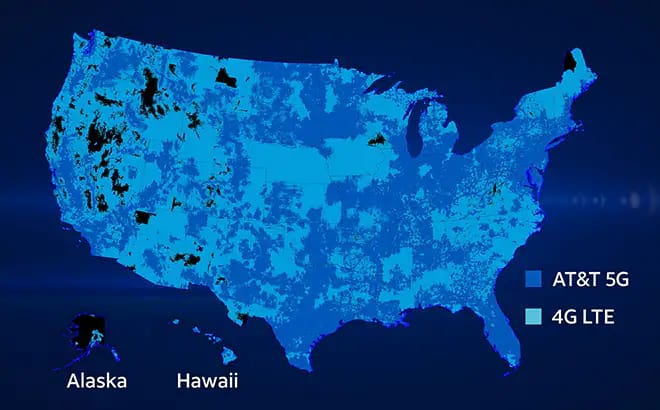
AT&T 5GSM network & coverage maps
Learn how to connect to our 5G network, which wireless plans include 5G access, and how to upgrade to a 5G-capable phone.

AT&T discount programs
Find out how to get discounts, savings, and benefits through your employer, organization, or school.