What is a OLED Display? Benefits, Differences & More | AT&T
What is OLED and why does it matter?
Info at a glance
- What’s the difference between OLED and LCD?
- What are OLED, AMOLED, POLED, PMOLED, and QLED?
- What devices have OLED or AMOLED displays?
- OLED and AMOLED in Apple devices
- iPhones with OLED
- iPads now have OLED
- Samsung devices with OLED
- Samsung smartphones with OLED
- Samsung tablets with OLED
- Smartwatches with OLED/AMOLED
- Which is better, OLED or LCD?
- Is OLED better than 4k?
What’s the difference between OLED and LCD?

OLED
OLED stands for Organic Light-Emitting Diodes. OLED displays are common in heandhelp devices and wearables, but are also used in TVs and monitors. There are many variations of OLED screens, all with their own acronym (more on this later).
In OLED screens, individual pixels are hit with electricity. In response, each pixel emits both light and color. A pixel that isn’t stimulated by electricity is unlit, which creates the color black. The combination of lit and unlit pixels creates the images you see.

LCD
LCD stands for Liquid Crystal Display—it’s more common in larger displays like TVs and computer monitors.
With LCD screens, LED lights backlight the entire display. Images are created when the backlight is filtered through the liquid crystal, which blocks some of the light.
Because of the backlighting, LCD screens have a tendency to be brighter overall.
What are OLED, AMOLED, POLED, PMOLED, and QLED?
AMOLED stands for Active-Matrix Organic Light-Emitting Diodes (regular OLED is considered passive). In AMOLED screens, each pixel can be controlled individually, which provides even sharper images.
POLED screens are OLED displays that are covered in polymer plastic (different from OLED TVs, which are usually covered by glass). The polymer cover is what provides a lighter weight for tablets and flexibility to smartphones with foldable screens
QLED (Quantum Light-Emitting Diode) is an upgraded version of LCD/LED technology. It’s clearer than your average LCD display, but it’s not as bright or clear as OLED.
What devices have OLED or AMOLED displays?
Many smartphones use OLED screens. The pixels in a smartphone OLED or AMOLED are smaller than in a TV or monitor and are arranged in a different pattern (a diamond versus a square grid, usually). Because the human eye is more sensitive to green tones overall, the number of green pixels on smaller OLED screens is reduced slightly
Apple devices with OLED
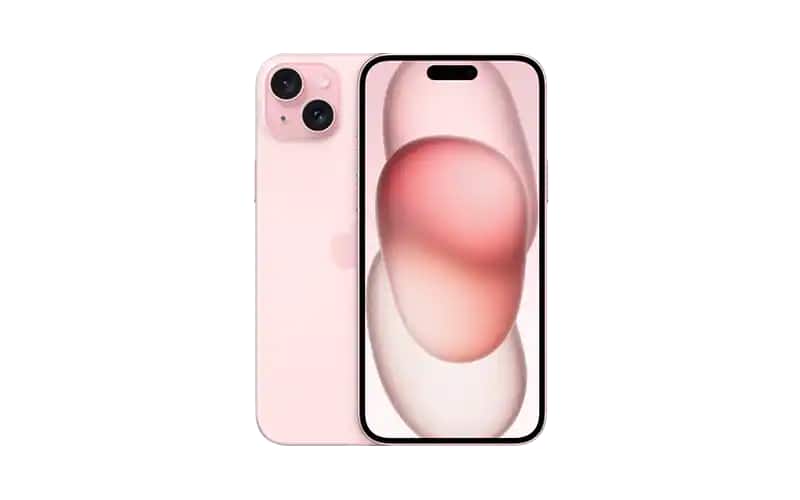
iPhones with OLED screens
Apple iPhones older than the iPhone 8 (and iPhone XR, iPhone 11, and iPhone SE), have LCD screens.
Starting with the iPhone X, Apple began using OLED in their higher-end iPhone models. The iPhone X, iPhone XS, iPhone XS Max, iPhone 11 Pro, and iPhone 11 Pro Max, as well as iPhones 12 through iPhone 15 all have OLED screens.
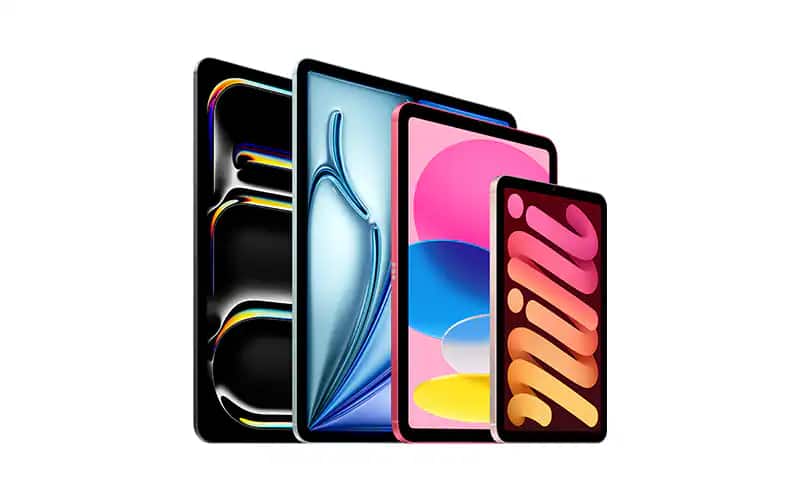
iPads now have OLED screens
In May 2024, Apple released the new iPad Pro and iPad Air. Both are available in two sizes, 11-inch and 13-inch, and come in multiple storage capacities.
The new iPads employ dual OLED panels that merge illumination to achieve full-screen luminosity. The latest iPad Pro offers 1000 nits of full-screen brightness for both SDR and HDR visuals (peak brightness of 1600 nits for HDR content).
iPads that were manufactured before May 2024 use LCD screens with Apple’s patented Ultra Retina display technology.
Samsung devices with OLED
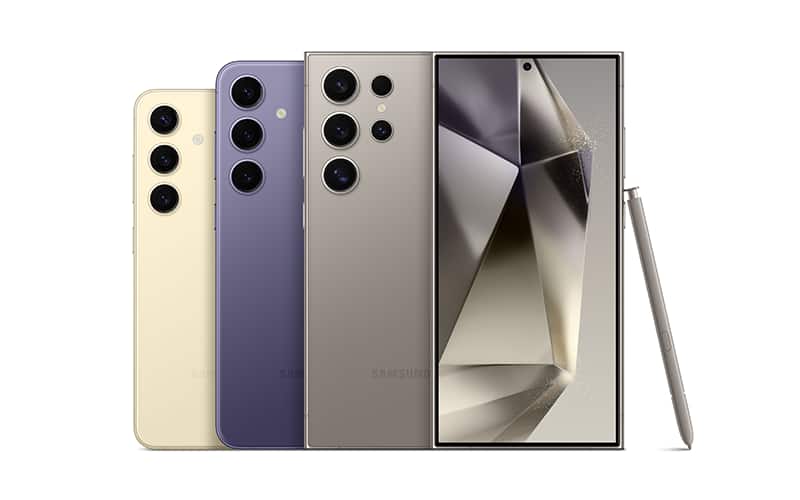
Samsung smartphones with OLED screens
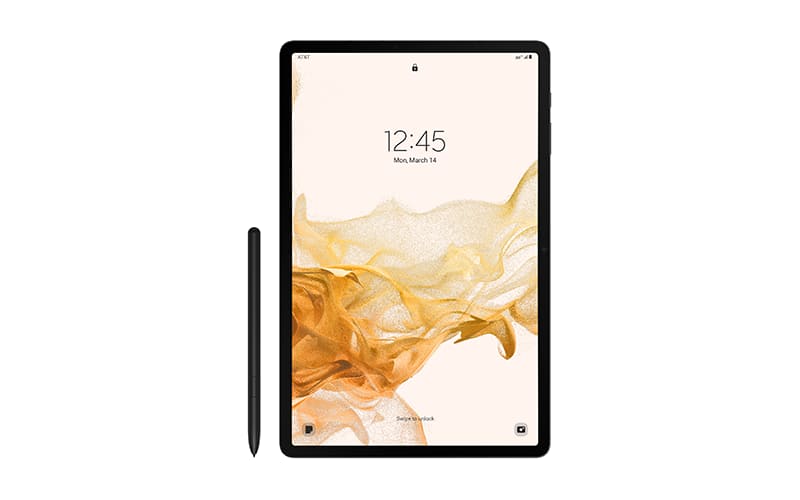
Samsung tablets with OLED screens
Smartwatches with OLED/AMOLED
Most smartwatches do use some form of OLED display. Apple is rumored to be looking into potentially manufacturing its own MicroLED display for its Apple Watch in some future release, but for now, it’s all OLED. The same is true for the Google Pixel Watch and Samsung’s Galaxy Watches.
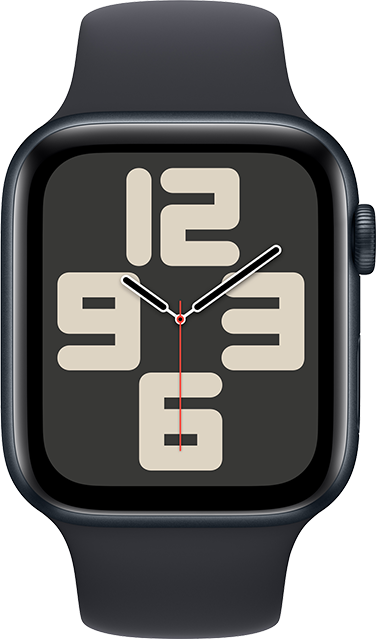
Watch SE 2nd Gen (2022) 44mm
Which is better: OLED or LCD?
OLED offers better color accuracy (including blacker blacks), faster response time, and better viewing angles. LCD is brighter, more affordable, and less prone to burn-in than OLED.
LCD | OLED | |
|---|---|---|
Contrast | ||
Saturation | ||
Brightness | ||
Viewing angle | ||
Response time | ||
Energy efficiency |
Highest contrast: OLED wins
An unilluminated OLED pixel can measure 0 nits,* which means that there’s no luminosity at all—a pure black.
A black LCD pixel, which is a backlit pixel that has been blocked, will always have some backlighting that shows through a little.
Color saturation: OLED wins
OLED displays offer a broader range of colors than LCD, so they show a larger number of colors at a higher accuracy.
Visibility/brightness: It’s a tie between LCD/LED
OLED screens typically offer better color contrast, offering better viewing in low-light situations. Because of its backlighting, LCD screens are brighter overall, so perform better in bright ambient light.
Best viewing angles: OLED wins
LCD screens have a limited viewing angle. OLED displays don’t have the same issue with image quality diminishing as the viewer moves to the side.
Fastest response time: OLED
Response time measures the time it takes a pixel to shift from one color to another. OLEDs win here (0.1 milliseconds vs. up to 1 millisecond)—so you get less motion blur during action scenes and less lag in gaming
Energy efficiency: It’s a tie between LCD/LED
OLEDs are more energy efficient when it comes to showing darker images. For lighter scenes, LCD/LED is more efficient.
Life span: LCD wins
OLED’s main pitfall is called burn-in—that’s where an image displayed onscreen for a very long time ends up getting permanently marked into the OLED pixels. It’s more likely to occur with TVs or monitors.
Is OLED better than 4K?
There’s a common misconception that 4K is different from OLED, but these terms aren’t mutually exclusive. In fact, 4K refers to a display’s resolution—the number of pixels on a screen—regardless of whether the screen is OLED or LCD/LED.
Both OLED and LCD/LED TVs are available in 4K resolution. Sometimes marketers refer to 4K as UltraHD or 4K UHD, but it’s pretty much the same thing.
When it comes to portable devices, we look at pixel density as opposed to pure pixel count. Smartphones have a very high pixel density (ppi—pixels per inch).
An iPhone 15 has a pixel density of 460ppi, whereas a 77-inch 4K TV might have a ppi of 80. Why the discrepancy? It mostly has to do with viewing distance. The closer you get to a screen, the easier it is to see individual pixels. Since we view smartphone screens closeup, the pixels need to be smaller and more densely packed to avoid being detectable.
Whereas with a 77-inch TV, you’re likely to be watching from several feet away. At that distance, you can’t discern individual pixels, even if there’s only 1/6 the pixel density.
How many companies make OLED displays?
Fun fact: While OLED displays are used in products sold lots of brands (including Apple, Samsung, Vizio, and SONY), all OLED displays are manufactured by LG and sold to these other brands.
More articles and information

Get your tablet connected
Add a line to your AT&T wireless plan for your new tablet or iPad.

Trade in your old iPad or tablet

Don't go a day without your iPad
Choose a protection plan or tablet insurance plan to protect against loss, cracked screens, and malfunctions.